Have you ever seen someone called a “snow bunny” online and wondered whether they were talking about skiing, fashion, or something completely different? You’re not alone. Slang can be confusing because the same phrase may have different meanings depending on the conversation, platform, and tone. The snow bunny meaning slang users search for today generally has two major interpretations: one connected to skiing and winter culture, and another used in certain racial or dating-related contexts.
Understanding the difference is important when reading texting slang, internet language, TikTok comments, Snapchat slang, Instagram chat terms, or casual online messaging. A phrase that sounds playful in one conversation could feel uncomfortable or inappropriate in another. This guide explains the meaning in simple language, shows how context changes it, gives safe texting examples, and explains when you should—and should not—use the expression.
What Does Snow Bunny Mean?
“Snow bunny” is a slang phrase rather than an internet abbreviation or social media acronym. It has several established uses, with the two most important being a winter/skiing meaning and a racialized dating meaning.
1. Winter and Ski Culture
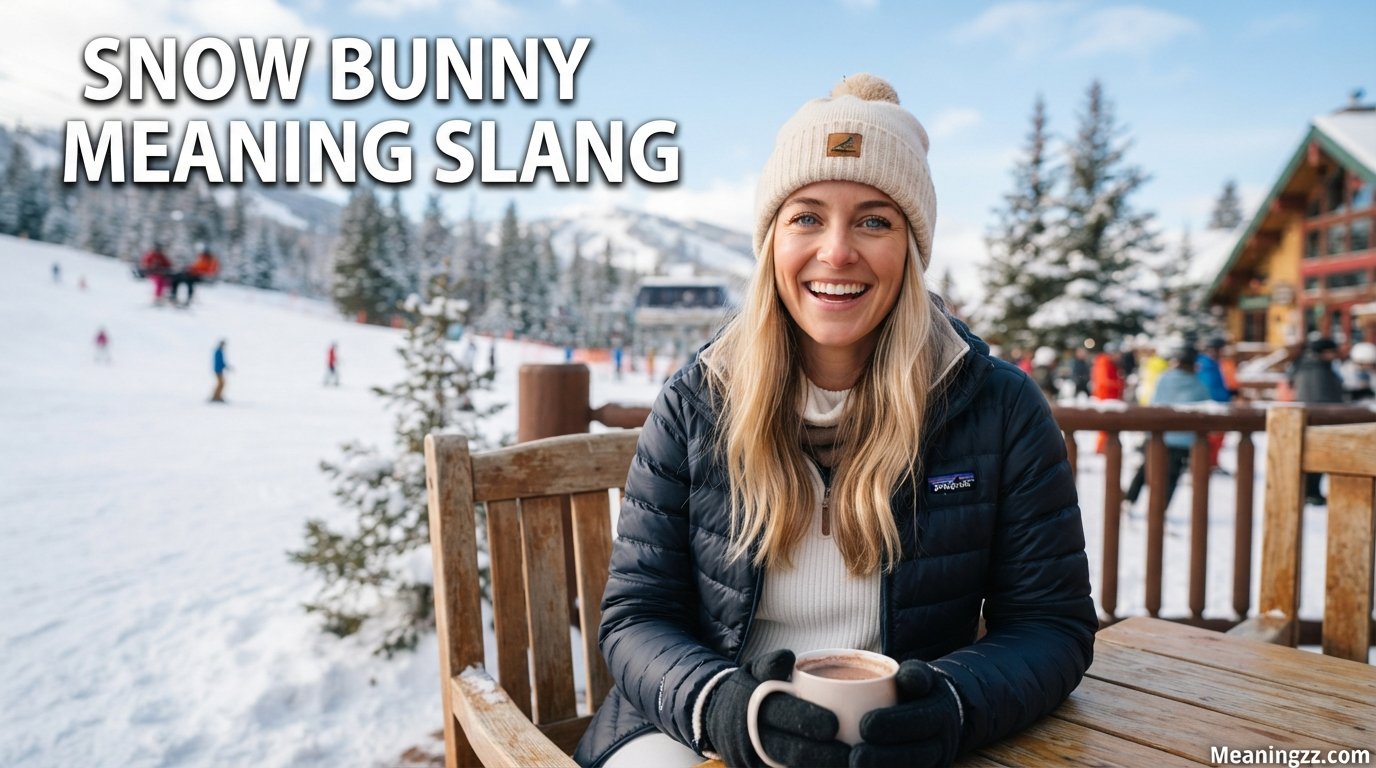
In skiing and snowboarding contexts, the phrase can describe a woman who enjoys skiing, snowboarding, ski resorts, or the winter resort lifestyle. It may also suggest someone who is relatively inexperienced on the slopes. Dictionary.com lists this as one of the established slang meanings.
For example:
“She’s going to the mountains this weekend—total snow bunny.”
Here, the surrounding conversation suggests winter activities rather than anything related to dating or race.
2. Racialized Dating Slang
There is also a separate slang use in which the phrase refers to a white woman, particularly in conversations involving interracial relationships or attraction. This meaning can carry racial stereotypes and may be considered offensive or disparaging depending on how it is used.
That is why you should not automatically assume the phrase is simply a cute nickname.
Is It an Acronym?
No. Unlike texting abbreviations such as “LOL,” “BTW,” or “WYD,” it is a two-word slang expression. It does not “stand for” another phrase.
Where Did the Phrase Come From?
The winter-related use has a long history. Dictionary.com records “snow bunny” as dating back to the 1940s–45 period, originally connected with skiing and winter culture. A later racialized meaning appeared in the late 20th century.
The phrase combines “snow,” which naturally evokes winter and skiing, with “bunny,” a playful informal label that has historically been applied to young women.
As language moved from ski resorts into popular culture, music, forums, and eventually social media, the expression developed additional meanings. This is a common pattern with internet slang: an older expression gets reused by different communities and acquires new associations.
Today, someone encountering the phrase online might see it in:
- Ski-trip posts
- Winter fashion captions
- TikTok comments
- Instagram posts
- Snapchat stories
- Casual text messages
- Discussions about relationships or cultural stereotypes
The important lesson is that context determines meaning.
How Is It Used on TikTok, Snapchat, Instagram, and WhatsApp?
There is no completely separate dictionary definition for each platform. Instead, different communities tend to use the expression according to the content they are discussing.
TikTok Meaning
On TikTok, the phrase can appear alongside ski trips, winter outfits, snowy vacations, and lifestyle content. It may also appear in discussions about dating or social stereotypes.
If a TikTok shows someone skiing in the mountains and the caption says “snow bunny vibes,” the winter interpretation is the obvious one.
If the surrounding video discusses relationships or racial preferences, however, the phrase may have the other meaning.
Instagram Chat Terms
Instagram captions and comments often use the expression as part of a winter aesthetic. Someone posting photos from a snowy vacation might use it as a playful description of their winter style.
For example:
“Mountain weekend ❄️ Feeling like a snow bunny.”
The context makes the intended meaning fairly clear.
Snapchat Slang
On Snapchat, it may appear in private messages, Stories, or jokes between friends. A friend going skiing could jokingly call themselves a snow bunny.
Because Snapchat conversations are often informal, tone and the relationship between the people involved matter more than the word itself.
WhatsApp Meaning
There is no special WhatsApp definition. In WhatsApp messaging, the phrase usually follows the same meanings found elsewhere online.
For instance:
“Are you ready for the snow bunny look tomorrow?”
could refer to winter clothing or a ski trip.
Meanwhile, a conversation about someone’s dating preferences could indicate the more sensitive racialized interpretation.
Snow Bunny Texting Examples
Seeing the phrase inside a complete conversation makes its meaning much easier to understand. Here are some beginner-friendly examples.
Example 1: Skiing
Friend A: “Are you skiing tomorrow?” Friend B: “Yep! I’m officially a snow bunny this weekend 😂”
This clearly refers to winter activities.
Example 2: Winter Fashion
Friend A: “That jacket looks perfect for the mountains.” Friend B: “Thanks! I’m going for the snow bunny aesthetic.”
Here, the phrase describes a winter-inspired appearance or lifestyle.
Example 3: Vacation
“We’re heading to a ski resort next week. I can’t wait to be a snow bunny!”
Again, the meaning is connected to snow and skiing.
Example 4: Dating Context
“He used that phrase while talking about interracial dating.”
In this situation, the phrase may have its racialized meaning rather than its winter meaning.
Example 5: Asking for Clarification
If you’re unsure what someone means, a simple response works:
“Do you mean the skiing/winter thing?”
That avoids making an assumption.
When Should You Use the Phrase?
The safest use is when the context is clearly about snow, skiing, snowboarding, winter vacations, or winter fashion.
For example, using it as a playful self-description among friends discussing a ski trip is relatively straightforward.
You can also avoid confusion by making the context obvious:
- “Ready for my ski-trip snow bunny era!”
- “Snowy weekend vibes!”
- “Living my winter-resort life.”
- “Mountain trip incoming!”
However, remember that even the winter meaning can sometimes sound like you’re commenting on someone’s appearance or attractiveness. Not everyone will interpret it in exactly the same way.
If you’re talking to someone you don’t know well, a neutral description such as “skiing fan,” “winter-lover,” or “ski-resort regular” may communicate your meaning more clearly.
When Should You Not Use It?
Be careful when the conversation has nothing to do with winter sports or snowy locations. The phrase can have a racialized meaning, and Dictionary.com specifically labels that usage as potentially disparaging or offensive.
It is particularly better to avoid using the phrase:
- In formal or professional communication
- When discussing someone’s race or dating preferences
- As a label for someone you barely know
- As a joke about someone’s ethnicity
- When you’re unsure how the other person will interpret it
- When describing a stranger based only on appearance
Slang depends heavily on social context. A phrase intended as a joke can still make another person uncomfortable.
If you simply mean that someone enjoys skiing, say exactly that. Clear language is often better than slang.
Common Misunderstandings About Snow Bunny
Because this expression has multiple meanings, several misunderstandings are common.
“It Always Means a Skier”
Not necessarily. The ski-related meaning is well established, but it is not the only meaning. The phrase also has a racialized meaning in some contexts.
“It Is an Internet Abbreviation”
No. It is not like “IDK,” “IMO,” or “TBH.” It is a slang phrase made from two ordinary English words.
“It Always Means Something Romantic”
No. A ski photo or winter-fashion post can use it without any romantic meaning whatsoever.
“TikTok Gave It Only One Meaning”
Not exactly. Social media can spread and popularize different meanings at the same time. The surrounding content is more useful than the platform name when figuring out what someone intended.
“The Literal Rabbit Meaning Is Usually Intended”
In online slang, usually not. When someone uses the expression to describe a person, they are generally referring to one of the slang meanings rather than an actual animal.
Alternatives to “Snow Bunny”
If you want to communicate the winter meaning without ambiguity, there are plenty of clearer alternatives.
For Skiing or Snowboarding
Try:
- Ski enthusiast
- Skier
- Snowboarder
- Winter-sports fan
- Ski-resort regular
- Mountain lover
For Winter Fashion
You could say:
- Winter-style lover
- Snow-day fashionista
- Winter aesthetic
- Cozy winter look
- Mountain-style fan
For a Casual Text
Instead of relying on potentially ambiguous slang, you could write:
“You look ready for ski season!”
or:
“Your winter outfit is perfect for the mountains.”
These alternatives communicate your idea without requiring the reader to interpret slang.
Why Context Matters So Much
Context is one of the most important concepts in understanding modern texting slang.
Consider this sentence:
“She’s such a snow bunny.”
Without additional information, the meaning is unclear.
Now add context:
“She spends every winter skiing in the mountains.”
The winter meaning becomes much more likely.
Change the context:
“The conversation was about interracial dating.”
Now the phrase may have the racialized meaning.
This is why NLP and semantic-search systems cannot always understand slang simply by matching individual words. Human readers also use surrounding words, images, hashtags, previous messages, tone, and cultural knowledge.
The same principle applies to other internet expressions. Words such as “baddie,” “ship,” “tea,” or “ghosting” can change meaning depending on how they are used.
FAQs
Is snow bunny a slang word?
Yes. “Snow bunny” is an established slang phrase with multiple meanings. Its best-known uses relate to skiing/winter culture and, separately, a racialized dating context.
Is snow bunny an abbreviation?
No. It is not an abbreviation, acronym, or initialism. It is a two-word slang expression.
What does snow bunny mean on TikTok?
On TikTok, it may describe someone associated with skiing, snowy vacations, winter fashion, or winter aesthetics. In some conversations, it can have the racialized dating meaning. Context is essential.
What does snow bunny mean on Snapchat?
There is no special Snapchat-only definition. In a Snapchat Story or chat about skiing or winter, it will generally have the winter-related meaning.
Is snow bunny a compliment?
Sometimes, but not always. In a winter-fashion or ski context, it can be playful or complimentary. In racialized contexts, it can feel stereotypical, objectifying, or offensive.
Is snow bunny offensive?
It can be, depending on context. The racialized meaning is particularly sensitive, and reputable dictionary references label that usage as potentially disparaging or offensive.
Does snow bunny mean someone who likes snow?
It can, especially when the conversation involves skiing, snowboarding, winter vacations, or snowy mountain culture. However, the phrase has other meanings too.
How should I respond if someone calls me a snow bunny?
If the context is unclear, simply ask what they mean. For example:
“What do you mean by snow bunny?”
That’s usually better than guessing.
Conclusion
The phrase “snow bunny” can be confusing because it has more than one established slang meaning. In winter and ski culture, it can describe a woman associated with skiing, snowboarding, ski resorts, or winter fashion. In another context, it can refer to a racialized dating stereotype involving a white woman, a usage that may be considered offensive depending on the speaker and situation.
The easiest way to understand it is to look at the context before interpreting the phrase. A snowy mountain photo, ski-trip caption, or winter outfit usually points toward the harmless winter meaning. A conversation about race or dating may indicate the more sensitive meaning.
So, when you encounter this texting slang on TikTok, Instagram, Snapchat, WhatsApp, or elsewhere, don’t rely on the words alone. Check the surrounding message, image, caption, and conversation. That small step can prevent a major misunderstanding.
